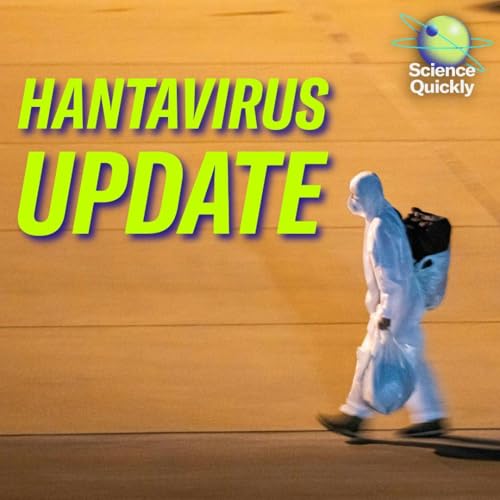
Couverture de Hantavirus update, PCOS name change, ‘cheeky’ fish behavior

Hantavirus update, PCOS name change, ‘cheeky’ fish behavior

Hantavirus update, PCOS name change, ‘cheeky’ fish behavior

Écouter gratuitement

Voir les détails

À propos de ce contenu audio

In this episode of Science Quickly, we get the latest on the hantavirus outbreak with Tanya Lewis, Scientific American’s senior desk editor for health and medicine. We also unpack why the common health condition previously named polycystic ovary syndrome, or PCOS, is now called polyendocrine metabolic ovarian syndrome, or PMOS. Then SciAm’s chief newsletter editor Andrea Gawrylewski shares an interesting story about subatomic particles from this month’s issue of the magazine. And finally, we dive into the phenomenon known as “cloacal diving”—wherein one fish hides in another animal’s “butthole.” Recommended Reading: Can hantavirus spread through the air? What we do and don’t know Why hantavirus takes so long to show symptoms and what that means for containment Doubts grow over theory that bird-watchers’ trip to Argentine landfill sparked hantavirus outbreak ‘PCOS is inaccurate’—why scientists renamed polycystic ovary syndrome Mining companies are using cosmic rays to find critical minerals Sucker fish are hiding in manta rays’ ‘butthole,’ new study reveals E-mail us at sciencequickly@sciam.com if you have any questions, comments or ideas for stories we should cover! Discover something new everyday: subscribe to Scientific American and sign up for Today in Science, our daily newsletter. Science Quickly is produced by Rachel Feltman, Fonda Mwangi, Sushmita Pathak and Jeff DelViscio. This episode was edited by Alex Sugiura, with fact-checking by Shayna Posses and Aaron Shattuck. Our theme music was composed by Dominic Smith. Learn more about your ad choices. Visit megaphone.fm/adchoices
adbl_web_anon_alc_button_suppression_c
Aucun commentaire pour le moment