

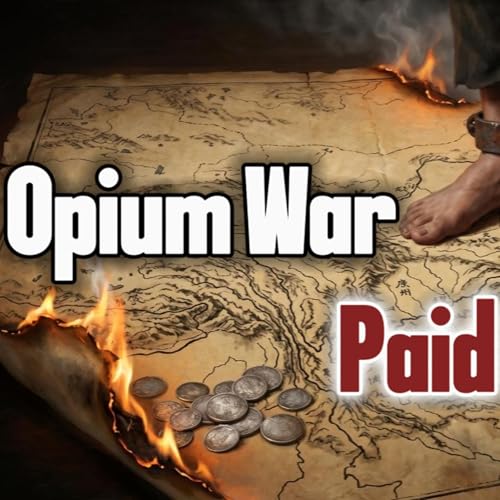
How the Opium War Bankrupted the Richest Man on Earth
Impossible d'ajouter des articles
Échec de l’élimination de la liste d'envies.
Impossible de suivre le podcast
Impossible de ne plus suivre le podcast

How the Opium War Bankrupted the Richest Man on Earth
-
Lu par :
-
De :
À propos de ce contenu audio
In 1834, one Chinese merchant was worth more than the entire United States government. Nine years later, he was dead — and his silver was building America.
Howqua — Wu Bingjian — was the richest man on earth in the 1830s. This Chinese merchant ran the Cohong, the imperial guild that monopolized foreign trade through Canton (Guangzhou) for a century. His personal fortune of $26 million in silver was more than double the annual outlays of the United States federal government. Then the First Opium War brought down the system that made him. This episode of The Silk Ledger audits how Howqua's fortune was built, how the Treaty of Nanking abolished the Cohong in 1842, and how Howqua had already moved his capital offshore to Boston before the collapse came. The story covers the Canton System, the opium trade that passed through Howqua's ledgers, his arrest by imperial commissioner Lin Zexu in 1839, the ransom of Canton in 1841, and the silver Howqua entrusted to a young Boston merchant named John Murray Forbes — silver that outlived him by fifty years, financed American railroads and mines, and built the fortunes of the Forbes, Perkins, and Roosevelt dynasties. A 19th century China history explainer from a forensic financial angle.