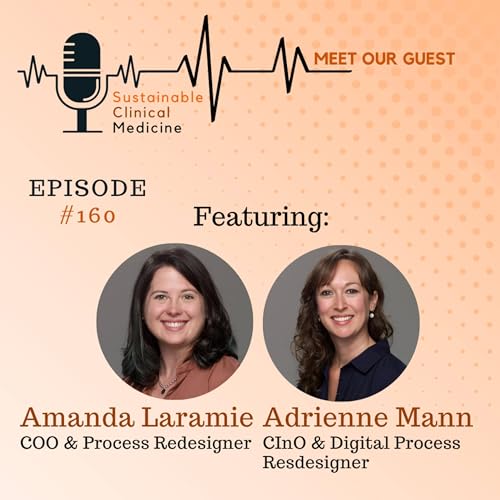
Couverture de Empowering Teams, Redesigning Care & Improving Health Outcomes with Amanda Laramie & Adrienne Mann - Episode 160

Empowering Teams, Redesigning Care & Improving Health Outcomes with Amanda Laramie & Adrienne Mann - Episode 160

Empowering Teams, Redesigning Care & Improving Health Outcomes with Amanda Laramie & Adrienne Mann - Episode 160

Écouter gratuitement

Voir les détails

À propos de ce contenu audio

Welcome to another episode of the Sustainable Clinical Medicine Podcast! Our host Dr. Sarah Smith interviews Coleman Associates staff Amanda Laramie and Chief Innovation Officer Adrienne Mann about how Coleman Associates helps healthcare clinics—especially community health centers—redesign care delivery through their Dramatic Performance Improvement (DPI) methodology. Adrienne describes how Coleman’s work in her Chicago community health center targeted goals such as cycle time under 30 minutes (from patient arrival to departure), no-show rate under 5%, and 100% real-time charting completion, leading to improved patient and staff satisfaction and reduced burnout. They explain cycle time as a measure of organized care and patient experience, and discuss how patient visit tracking reveals bottlenecks, handoffs, and physical-layout issues that slow flow. They cover strategies to reduce no-shows, framing them as a sign of a broken relationship and an access problem; examples include mystery shopper calls to identify barriers like long hold times, easier cancellation processes, and proactive visit confirmation and preparation. They discuss role realignment and preparing for visits through team-based workflows, including the “sheep-shepherd model” where MAs or nurses shepherd clinic flow to protect clinician time, reduce interruptions, and support “today’s work done today.” Specific tactics include team “dance steps,” robust intake and concise handoffs, the “midway knock” check-in (physical or virtual), and having staff “bodyguard” clinicians while charting to prevent interruptions and avoid getting behind on notes. They also discuss inbox/worklist overload, aiming for net-zero inbox at day’s end through better routing/oversight, team support for tasks, and a “red carpet exit” to reduce follow-up calls by addressing questions and ensuring orders/referrals are completed before the patient leaves. The conversation addresses individual needs and disabilities (including neurodiversity), emphasizing that frontline staff should design and adapt solutions; examples include noise-canceling headphones for charting and using space creatively (e.g., an exam room as a quiet charting space). They discuss shifting visit prep from clinicians to teams so multiple “brains” are aware of patient needs (e.g., hospital follow-ups, missing labs, forms), including pre-visit calls asking about ED visits, specialists, and concerns. They argue checkbox-heavy requirements (e.g., Medicare-related items) should be handled by nurses or staff through pre-visit “concierge” workflows, and note EHR limitations can be addressed through optimization and interdisciplinary decisions about filing and access. They conclude by encouraging curiosity and questioning existing systems (“why” thinking), noting that everything is changeable except load-bearing walls, and provide ways to find Coleman Associates online. They state they primarily work across the U.S. but are open to working anywhere, including Canada and Australia. Here are 3 key takeaways from this episode: Cycle Time Under 30 Minutes Indicates Organized Care: Cycle time (patient arrival to departure) isn't about rushing—it's about eliminating confusion, handoffs, and mishaps. Shorter cycle times mean better-organized care that respects patients' time, especially those without PTO or childcare access. The goal is efficiency through coordination, not speed through corners cut. No-Shows Signal Broken Relationships, Not Patient Irresponsibility: When no-show rates exceed 10-15%, it reveals systemic issues: long hold times making cancellations difficult, appointments booked months in advance, or lack of relationship-building. The solution involves confirmation calls, easier cancellation processes, and recognizing that patients who no-show often need care the most—they're the ones appearing in emergency departments instead. The Shepherd-Sheep Model Empowers Teams and Protects Clinician Focus: Medical assistants and nurses should "shepherd" the clinician's flow—staying slightly ahead, looping back to check needs, and bodyguarding charting time from interruptions. This allows clinicians to focus on what only they can do while the care team handles preparation, coordination, and protection of workflow. The result: 100% real-time charting completion becomes achievable. Meet Amanda Laramie & Adrienne Mann: Amanda is experienced in process design, training, and leadership development. Before working with Coleman, Amanda worked for a women’s health center in Providence, Rhode Island. She was a Medical Assistant and later, a Health Center Manager. Amanda has been working with Coleman Associates since 2011 and has coached hundreds of health center teams. She is a team leader and current COO of Coleman Associates. Adrienne Mann is a dynamic coach, trainer, healthcare leader, speaker, and podcast host passionate about driving positive change. She ...
Les membres Amazon Prime bénéficient automatiquement de 2 livres audio offerts chez Audible.

Vous êtes membre Amazon Prime ?

Bénéficiez automatiquement de 2 livres audio offerts.
Bonne écoute !
    Aucun commentaire pour le moment
