Episodes

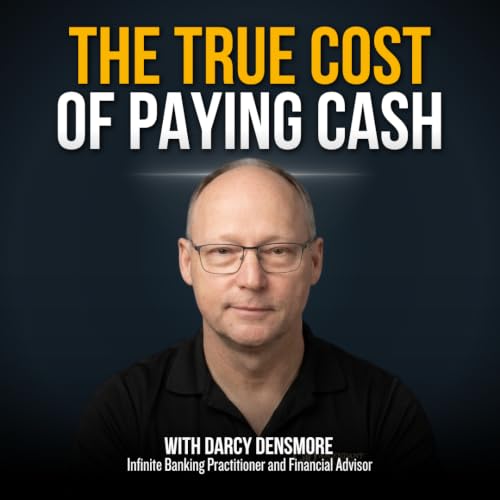
  • 346: Is Paying Cash for Business Equipment Costing You More?
    9 Nov 2026
    For many Canadian business owners, paying cash for a new truck, vehicle, or piece of equipment feels like a financially responsible decision. There are no monthly financing payments, no additional borrowing commitment, and no loan interest. But there is another question worth asking: What opportunities might you give up by using that cash? Understanding Opportunity Cost Opportunity cost refers to the value of the next-best alternative you give up when making a decision. For a business owner, using $80,000 to purchase equipment means that capital is no longer immediately available for other expenses, opportunities, or emergencies. That doesn’t automatically make paying […]
    Show more Show less
    56 min
  • 345: Policy Loans Explained | 5 IBC Questions Worth Asking
    30 Oct 2026
    Explore five IBC questions with Mike Smela and Richard Canfield, covering policy loans, funding limits, dividends, marketing and tax considerations.
    Show more Show less
    1 hr and 11 min
  • 344: Why Real Estate Investors Need Liquidity
    21 Oct 2026
    Building a successful real estate portfolio requires more than finding profitable properties. It also requires maintaining access to capital when circumstances change. For real estate investors, liquidity is the ability to access money when needed without being forced to sell investments or rely entirely on additional borrowing. You might own several properties, have significant equity, and generate rental income. But if an unexpected expense arrives and your accessible cash reserves are limited, even a strong-looking portfolio can experience financial pressure. In Episode 344 of Wealth On Main Street, Richard Canfield speaks with Connor Eagleson about real estate investing, financial preparedness, the […]
    Show more Show less
    1 hr and 9 min
  • 343: How a Life Insurance Policy Loan Helped After a Medical Emergency
    19 Oct 2026
    Listen on Spotify Additionally, this post shares one Canadian client’s experience for education. However, this is not insurance, financial, legal, or tax advice. Rules and timing vary by insurer, province, and country. Some personal details are left out on purpose; the full episode includes more, as shared by the guest. Policy Loans and Medical Emergencies: A Case Overview David Berry’s income dropped after a medical emergency. He was a Canadian client of advisor Paul Eikeland at Ascendant Financial. Additionally, he used a policy loan to cover a year of car insurance. This example shows How a Life Insurance Policy Loan […]
    Show more Show less
    1 hr and 2 min
  • 342: Cash Balance Plan vs 401(k), How the Deduction Works for Business Owners
    7 Oct 2026
    If you own a profitable business, your retirement plan often targets employees, not owners. In Part 2 of our series, Rohit Punyani, co-founder and Chief Solutions Officer of The Owner’s Asset, sits with Jayson Lowe. They explain how a cash balance plan vs 401(k) works and why it behaves differently. Missed the start of the series? Watch Part 1 here. Start with what you already know Rohit teaches cash balance plan vs 401(k) by comparing them to the 401(k). But he’s upfront that this is a teaching shortcut, not a full compliance picture. Additionally, the contribution is recorded as a deduction. […]
    Show more Show less
    33 min
  • 341: How Business Owners Turn Tax Planning Into an Asset?
    2 Oct 2026
    Most financial conversations with business owners start the same way: “How much did you make?” Rohit Punyani, Co-Founder & Chief Solutions Officer of The Owner’s Asset, a pension specialist and former Chief Investment Officer, joins Jayson Lowe and Richard Canfield to go a lot deeper than that. Here’s what the conversation actually covers. Why does “cash flow” matter more than “income”? “The words we use determine our wealth,” according to Rohit Punyani. “If you say I want more income, you’re gonna end up okay. But if you say I want more cash flow, the world is yours and everything in it.” […]
    Show more Show less
    26 min
  • 340: Is a DRIP Portfolio Worthwhile With Infinite Banking?
    25 Sep 2026
    Is Infinite Banking Actually an Investment? In short, Infinite Banking is a capitalization tool, not an investment. Additionally, it builds liquidity. Investment, including a DRIP Investment with Infinite Banking portfolio, is what you do with that liquidity once it’s available. Is a DRIP Portfolio Worth It With Infinite Banking? Yes, for the right person. A DRIP Investment with Infinite Banking solves two problems. Additionally, pairing them deliberately is the point, not a compromise. Infinite Banking controls where your investable capital comes from. DRIP investing determines what productive businesses that capital actually owns. Run side by side; one funds the other. What […]
    Show more Show less
    25 min
  • 339: Is Infinite Banking an Investment?
    22 Sep 2026
    “An investment should only be in something that you know a great deal about. Everything else, I repeat, everything else, is speculation.” That’s Nelson Nash‘s line, and it’s blunter than most people want to hear about their own portfolio. In a recent Wealth on Main Street episode, Kurt Berry joined Richard Canfield. Berry has nearly 30 years in finance. Thus they discuss what that means and why many investors actually speculate. The Real Difference Between Investing and Speculating Most people assume investing just means buying something, a mutual fund, a stock, an index fund and holding onto it. According to Kurt, […]
    Show more Show less
    33 min