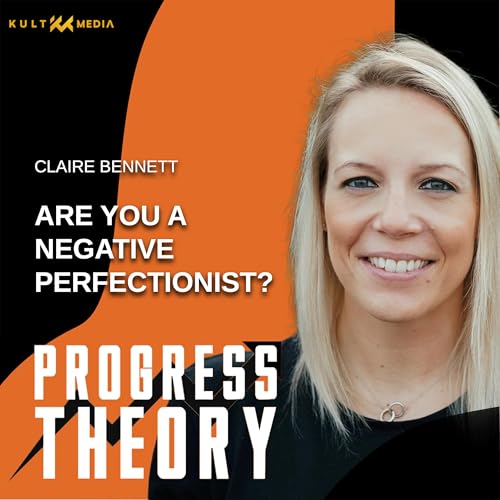
Cover of The Progress Theory

The Progress Theory

The Progress Theory

By: The Progress Theory
Listen for free

Season's Savings | 0.99 €/month for 3 months

5.99 €/month thereafter - terms apply. Cancel monthly.
Welcome to The Progress Theory. Our purpose is to teach and discuss scientific principles to show how we can enhance and optimise human performance. We will deliver you interviews with world-class experts (or legends as we prefer to call them), exciting real-world application of Sport Science and will explore some of the common myths and misconceptions in Health & Wellbeing. We want all of our listeners to develop the skills to implement the knowledge they obtain from the show into their everyday lives. These skills can be applied towards improving sporting performance and conquering physical challenges, or it can be in developing a better quality of life.KULT Media 2023 Hygiene & Healthy Living Personal Development Personal Success
Episodes
  • VO2 max: are you training the wrong limiter? | Evan Peikon
    19 Oct 2026
    How should athletes and coaches use physiological data to make better training decisions—especially when so many new wearables promise objective feedback, but not all data leads to useful change? In this episode of The Progress Theory, Dr Phil Price welcomes physiologist and experienced CrossFit coach Evan Peikon, whose revised book Paradigm Shift explores limiters in endurance performance and what modern measurement can reveal.Phil and Evan Peikon address a core challenge: most conventional energy systems models assume athletes move neatly from one fuel supply to another, but real-world testing—and advanced tools like muscle oxygen sensors—show that the body uses more complex control systems. They discuss how to identify practical “limiters” (such as delivery, utilisation and respiratory limitations), why athletes often misidentify what’s holding them back, and how to use simple training adjustments to address the true bottleneck.Listeners interested in bridging scientific theory and training practice will find thoughtful guidance—especially on adapting interval and resistance programmes according to an athlete’s specific physiological profile, and when to trust (or question) both subjective feelings and objective metrics.In this episode, we discuss:00:00 – Evan Peikon: PhD focus, biotech and human performance work04:14 – How experience in human performance informs precision oncology and pathogen research07:31 – Returning to human performance and revisiting Paradigm Shift09:23 – Critique of traditional energy systems models10:07 – The shift towards cardiovascular control, technology advances, and a systems view12:29 – Use of muscle oxygen sensors (NIRS) and the changing accessibility of tech13:24 – Data collection versus interpretation: why understanding lags behind technology15:20 – The three main limiter archetypes: delivery, utilisation and respiratory17:52 – Diagnosing limiters with practical and technological assessments21:17 – Limiter prevalence across sports and levels: why some persist at the elite level23:44 – HYROX, selection bias and comparing CrossFit’s changing athlete profiles26:56 – Programming examples: training for delivery vs. utilisation limited athletes32:42 – How limiter-based training integrates into wider planning36:10 – Sport-specific application: shifting from mistaken muscular endurance work39:45 – Recognising how small training tweaks can yield big physiological returns40:40 – How to identify your limiter without advanced technology44:39 – Typical signs of each limiter in performance and movement patterns48:52 – Limitations of structural and subjective assessment51:02 – How to use NIRS data to refine intervals, volume and progression56:49 – Testing, adaptation and changing only what matters58:09 – Why most effective coaching is about subtle adjustments, not constant novelty59:12 – Evan Peikon’s current work and resourcesTakeawaysIdentify the true training limiter, not just the most obvious symptom: Athletes often misinterpret their subjective feelings after hard sessions—believing, for example, that fatigue in the arms or legs points to a muscular problem, when underlying cardiovascular or respiratory limitations may be the real cause. Understanding what system is actually limiting progress is essential for effective programme design.Modern measurement tools are only helpful with the right interpretation: The availability of muscle oxygenation sensors and comprehensive wearable data has exploded, but collecting more metrics doesn’t guarantee smarter training. Evan Peikon suggests that real value comes when data streams are combined to inform clear decisions about interval structure, rest, or when to progress.Practical protocols work best when matched to the limiter: Programmes should use training methods (such as adjusting interval pacing or exercise sequencing) that specifically address whether the athlete’s limiting factor is supply (delivery), muscular oxygen use (utilisation), or respiratory function. Subtle tweaks can unlock improvements, and protocols don’t need to be complex if matched to the individual's physiology.FOLLOW OUR PODCASTThe Progress Theory: @theprogresstheoryDr Phil Price: @drphilpriceEvan Peikon: https://www.evanpeikon.com/Resources mentionedParadigm Shift by Evan PeikonNIRS (Near-Infrared Spectroscopy) tech and muscle oxygen sensorsEvan Peikon SubstackTraining Think Tank (referenced in context of testing and applied coaching)Explore more episodes and resources at: https://www.theprogresstheory.com/For all our other episodes and to get in touch, please visit www.theprogresstheory.com.Thanks for listening!This podcast is hosted by Captivate, try it yourself for free.KULT Media 2023Mentioned in this episode:Podcast Produced By KULT MediaBefore we wrap up, I want to give a shout-out and my thanks to my production partner, Kult Media. If you are thinking of launching a podcast or want ...
    Show more Show less
    1 hr and 1 min
  • Maximise performance using NIRS with Jem Arnold
    11 Aug 2025

    Welcome to another episode of The Progress Theory, where we explore the latest scientific principles to help you optimise your performance. In this episode, Dr Phil Price sits down with Jem Arnold—a physiologist, physiotherapist, and PhD candidate at the University of British Columbia with a fascinating dual focus on high-performance sport and clinical research.

    Jem’s work dives deep into individual responses to training and the use of Near Infrared Spectroscopy (NIRS), a cutting-edge wearable technology that measures muscle oxygenation both in the lab and out in the real world.

    In this episode, Jem breaks down what NIRS is, how it works, and why its ability to capture local muscle oxygenation is so useful for endurance athletes, hybrid competitors, and anyone interested in interpreting the body’s signals during exercise. Drawing from both his research and personal experience with vascular conditions affecting elite cyclists, Jem shares insights on programming, individual variability, and how blending subjective feedback with objective tech can revolutionise our approach to training.

    Whether you’re curious about the next frontier of monitoring tools, want to understand performance plateaus, or just love to geek out on physiology, you’ll find plenty to stimulate your thinking in this conversation. As always, don’t forget to follow The Progress Theory for more episodes and resources. Let’s dive in!

    In this episode, we discuss:

    • 00:00 Introduction
    • 05:17 Iliac Artery Compression in Athletes
    • 09:03 From Clinic to Laboratory Journey
    • 11:28 Cyclists' Arterial Strain Issue
    • 13:58 Rare Condition in Endurance Cyclists
    • 18:28 Quadricep Oxygenation and Flow Limitation
    • 22:04 Compensation and Performance in Athletes
    • 27:01 Understanding Metabolic Demands in Exercise
    • 30:33 Metabolic Limitations in Athletic Performance
    • 33:10 Steep Deoxygenation: Overexertion Warning
    • 37:05 Device-Specific Trends in Oxygen Measurement
    • 40:04 Assessing Athletes' Functional Oxygen Range
    • 44:04 From Data to Actionable Insight
    • 49:04 "Assessing Power and SMO2 Balance"
    • 52:53 Selective Use of Training Gadgets
    • 56:04 Incremental Training Feedback Process
    • 58:06 Inconsistent Data Interpretation Challenges
    • 01:00:48 Blogs: Informal Idea Sharing

    Takeaways

    NIRS for Real-World Monitoring: Wearable NIRS devices provide invaluable real-time insight into local muscle oxygenation, allowing coaches and athletes to better understand individual physiological responses during both training and competition.

    Individual Variability is Key: Jem emphasised that group-level sports science research doesn’t always translate directly to individual athletes. NIRS can help tailor interventions and programming by capturing each athlete’s unique response, especially when combined with subjective reports.

    Practical Application Requires Context: Having all the gadgets is great, but Jem highlighted the importance of integrating NIRS data with athlete sensations, performance metrics, and expert guidance. It’s about turning data into tailored, actionable information—don’t let the numbers overwhelm the athlete or the process!

    FOLLOW OUR PODCASTFollow our Host / Guest
    • @theprogresstheory
    • @drphilprice
    • @
    Show more Show less
    59 min
  • How Can Growth Mindset Transform Your Performance? with Claire Bennett
    4 Aug 2025

    Hello, and welcome to The Progress Theory where we discuss scientific principles for optimising human performance.

    In this episode, we are joined by former GB fencer and now mindset and performance coach, Claire Bennett. Now mindset is such an important part of the elite performer.

    We're so focused on achieving a particular goal that we often lose sight of what's important, which can lead to resentment and sometimes poor performance. In this episode, Claire talks about her experience at the top level of fencing and how she's utilised all of that experience to start her mindset and performance coach business, Perform, be happy.

    In this episode, we discuss:

    • 0:50 - Introduction
    • 02:48 - Transitioning from a full time athlete career
    • 09:20 - Athlete self-care and self-appreciation
    • 12:02 - Negative perfectionism and practise
    • 15:41 - Overcoming negative perfectionism
    • 17:20 - Growth Mindset and Getting outside your comfort zone
    • 24:12 - Anxiety in different professions
    • 28:18 - Insecurity
    • 32:28 - Practical recommendations from a performance coach

    Takeaways

    🔹 Purposeful Practice Over Perfection: It's not about doing more, it's about doing it right. Focus on quality, not quantity. Perfect practice, rather than just practice, leads to top performance.

    🔹 Growth Mindset is Key: In any high-performing environment, whether you're an athlete or a musician, adopting a growth mindset can turn fear and self-doubt into opportunities for growth.

    🔹 Embrace Challenges as Opportunities: Reframe fears and pressures by seeing them as chances to learn and grow. Shift from "I have to" to "I get to" and watch how it transforms your outlook.

    FOLLOW OUR PODCASTFollow our Host / Guest
    • @theprogresstheory
    • @drphilprice
    • @performbehappy
    • Singing Challenge

    For all our other episodes and to get in touch, please visit www.theprogresstheory.com.


    Thanks for listening!


    This podcast is hosted by Captivate, try it yourself for free.


    KULT Media 2023

    Mentioned in this episode:

    Progress Theory Newsletter

    The Progress Theory newsletter. If you want the latest information and recommendations on how to optimise your physical and mental performance, then subscribe to the free Progress Theory newsletter on Substack today. Click the link in the show notes and subscribe to get the best information on human performance sent straight to your email. https://theprogresstheory.substack.com/ Sign up today.

    Substack

    Podcast...

    Show more Show less
    36 min
adbl_web_anon_alc_button_suppression_t1
No reviews yet