Episodes

  • You Had a Happy Childhood. So Why the Anxiety? with Susanna Sweeney #197
    26 Nov 2026
    Susanna Sweeney grew up in East Berlin and was 19 when the wall came down. Faced with shelves full of yoghurts in plastic, she was repulsed rather than tempted, and a grant to study in Galway turned into a life in Ireland. A copy of The Road Less Travelled on a bookshelf where she was staying set her on the path to psychotherapy, starting with survivors at the Rape Crisis Centre in Galway.Now she works mostly with women in midlife who have what she calls mystery anxiety: it started in the last couple of years, and they remember a happy childhood. She tells Laura why the work leads back to childhood anyway, and why faulty childhood programming can happen without anyone being to blame.She is frank about her own field, too: she says there is no common standard for training psychotherapists. And she explains trauma as a defensive movement that got frozen, and how Havening Techniques use touch to work on a memory without reliving it.This episode discusses trauma, including sexual abuse, and suicide. If you are struggling, the support lines are below.🔑 Key PointsMystery anxiety in midlifeMany of Susanna's clients have anxiety that began recently, with no obvious cause and fond memories of childhood.Faulty childhood programming, without blameA parent who fell ill or bullying no one noticed can look innocuous to an adult and still leave a big mark on a child.A child under seven can't make sense of itSusanna says the prefrontal cortex doesn't start developing until about seven, so a young child has no way to make sense of what happens around them.Talk to your kidsUnder the Stasi her parents didn't explain why nothing could be said, and even a short, age-appropriate explanation would have helped her feel less alone.The stress bucketMany small difficult experiences and a single highly traumatic one are handled by the brain in similar ways, and either can fill the bucket until it overflows.Midlife hormones are the triggerHormonal changes strain the coping mechanisms you relied on, just as the children need you less and you are left facing yourself."They don't"Laura asks how someone can know their psychotherapist is properly trained; Susanna's first answer is "they don't", you'd have to ask questions, because there is no common standard.Trauma as a frozen movementA defensive movement that was overwhelmed gets stuck in the body; completing it within the window of tolerance can bring substantial relief.📚 ResourcesContact Susannaemail her about her work: info@repairenting.comFaulty Childhood Programming GuideSusanna's free guide, with her weekly emailsOptimise your Personality for SuccessSusanna's Facebook group, with free trainings and workshopsThe Road Less TravelledM. Scott Peck, the book that set Susanna on the road to psychotherapyHavening Techniquesthe touch-based method developed by Dr Ronald RudenDublin Rape Crisis Centrefree 24-hour national helpline, call 1800 77 8888Pietafree 24/7 crisis support, call 1800 247 247 or text HELP to 51444Samaritans Irelandfree support, any time, call 116 123⏱️ Timestamps00:00 — Coming to Ireland04:30 — Mystery anxiety in midlife05:17 — Growing up in East Berlin13:58 — Faulty childhood programming18:08 — The Stasi, and talking to your kids23:38 — It can happen without blame25:38 — Opening the can of worms31:00 — Why midlife hits so hard39:17 — Freud, Damasio and the science46:55 — How do you know your therapist is any good?50:16 — Trauma as a frozen movement53:21 — EMDR and Havening Techniques01:04:45 — Can someone work on themselves?01:08:50 — Advice for young people and the meaning of lifeThanks for listening! You can watch the full episode on YouTube here. Don’t forget to follow The Laura Dowling Experience podcast on Instagram @lauradowlingexperience for updates and more information. You can also follow our host, Laura Dowling, @fabulouspharmacist for more insights and tips. If you enjoyed this episode, please subscribe and leave a review—it really helps us out! Stay tuned for more great conversations. Hosted on Acast. See acast.com/privacy for more information.
    Show more Show less
    1 hr and 14 min
  • Bitesize Moment: "The Sun in Ireland Is the Same as the Sun in Spain." — Prof Nicola Ralph on Skin Cancer
    24 Nov 2026

    In this bitesize moment pulled from the Laura Dowling Experience back catalogue, a consultant dermatologist explains how common skin cancer is in Ireland, the four to six week rule for checking any changing mark, and how treatable it is when caught early, including how far immunotherapy has come for advanced cases.


    Ever told yourself you don't need sunscreen because you're only in Ireland? A consultant dermatologist explains why that's exactly the thinking that catches people out, and the one simple rule that tells you when a mark on your skin needs a check.


    🔑Key Points

    • Skin cancer is the most common cancer in Ireland, with around 13,500 cases a year, and that number is predicted to keep rising

    • The sun in Ireland causes the same damage as sun anywhere else; sunburn happens here too, not just abroad

    • The rule of thumb: if a new spot or mark lasts longer than four to six weeks, or keeps changing in shape, size or colour, get it checked by a GP

    • Melanoma is usually a changing mole or new brown mark and is the type that can spread; basal cell carcinoma, the most common skin cancer, does not spread internally and is very manageable


    🎧 Listen to the full episode here.

    Thanks for listening! You can watch the full episode on YouTube here. Don’t forget to follow The Laura Dowling Experience podcast on Instagram @lauradowlingexperience for updates and more information. You can also follow our host, Laura Dowling, @fabulouspharmacist for more insights and tips. If you enjoyed this episode, please subscribe and leave a review—it really helps us out! Stay tuned for more great conversations.

    Hosted on Acast. See acast.com/privacy for more information.

    Show more Show less
    11 min
  • It Took Her 10 Years to Stop Blaming Herself with Karen Underwood #196
    19 Nov 2026
    Karen Underwood moved from Chicago to Cork in 1997 with her husband and their two small children, Christiana and Erbie. Erbie, her son through adoption, was the boy the men on the green rang her about: basketball, hurling, and his friends crowding her kitchen after games. In January 2012, in his Leaving Cert year, he died by suicide. He was 18.In this conversation Karen tells Laura about the night itself, the moment in Cork University Hospital when he looked at her and said "I'm sorry", and the ten years it took her to stop blaming herself. She explains why she says no one commits suicide, why she goes into any school that asks her, and why a grade matters far less than a child still being here.She also talks about a church that taught her sex was shameful, the drink-driver who left her with nine fractures in her pelvis at 18, falling for a woman across the room in Cork in 1998, the racism she meets in Ireland now, and the Barbra Streisand song that got her singing again. And she closes on the all-white border she planted for her son, and the robin that told her it was time to let the colour in.This episode discusses suicide. If you are struggling, the support lines are below.🔑 Key PointsBorn from the womb, born from the heartChristiana arrived after seven years of infertility, and Erbie came to Karen through fostering, a long-term placement that became an adoption.The hit-and-run that sent her down the aisleAt 18, walking out of her best friend's funeral, she was knocked down by a drink-driver who didn't stop, and she woke from a coma believing God had saved her to get married.The signs are not always obviousErbie had hidden his grades, they rowed, and he barely ate that night; Karen says there were signs she missed, and that it could happen to any parent.Ten years to stop blaming herselfIt took her a decade, and she now says she is not responsible for anyone's choice to die by suicide.No one commits suicideThe phrase comes from when it was illegal, and Karen wants the language changed so people who die by suicide are not labelled as criminals.Grades matter less than being hereKaren failed her Leaving Cert and went on to an honours degree in psychology and biology, and she tells students and parents that a child still being alive is what counts.She wears her immigration on her skinIreland is the best thing that ever happened to her, but she is more cautious now, and was recently called a racial slur after a bad traffic move.Let the colour inShe planted an all-white border for Erbie; years later colour crept in, a robin kept her company, and she took it as her son telling her to let colour back into her life.📚 ResourcesPietaFree 24/7 crisis support, call 1800 247 247 or text HELP to 51444Samaritans IrelandFree support, any time, call 116 123Love Your Vulva LiveLaura's women's health show, at the National Concert Hall on 30 and 31 January 2027We Made It, KidJackie McCarthy O'Brien's memoir; Karen tells Laura to get her on the podcast⏱️ Timestamps00:00 — Getting older, menopause and caring how you show up03:18 — Meeting Karen at Love Your Vulva06:19 — A best friend's funeral and a hit-and-run10:09 — "My son was born from my heart"17:05 — Moving from Chicago to Cork24:00 — The morning she called him for school27:19 — "He said, I'm sorry"35:03 — No one commits suicide43:17 — Buying a casket, not a bed47:26 — Liking girls, and the shame that came with it55:29 — Wearing her immigration on her skin01:05:49 — What Love Your Vulva means for Irish women01:12:56 — Advice for young people and the meaning of life01:14:50 — The white border and the robinThanks for listening! You can watch the full episode on YouTube here. Don’t forget to follow The Laura Dowling Experience podcast on Instagram @lauradowlingexperience for updates and more information. You can also follow our host, Laura Dowling, @fabulouspharmacist for more insights and tips. If you enjoyed this episode, please subscribe and leave a review—it really helps us out! Stay tuned for more great conversations. Hosted on Acast. See acast.com/privacy for more information.
    Show more Show less
    1 hr and 19 min
  • Bitesize Moment: "I Felt This Sense of Peace." — Dr Brian Pennie on Surrender and Recovery
    17 Nov 2026

    In this bitesize moment pulled from the Laura Dowling Experience back catalogue, Dr Brian Pennie, neuroscientist, author and lecturer at Trinity College Dublin, in long-term recovery from heroin addiction tells the story of losing his job and reaching breaking point, a seizure and its aftermath in hospital, the moment of surrender that changed everything, and a professor's passing comment that set him on the road to neuroscience.


    What if the moment everything falls apart is also the moment it starts to change? Dr Brian Pennie on the seizure, the hospital trolley, and the strange peace that followed.


    🔑Key Points

    • Brian describes reaching a point where nothing was working anymore and he had nowhere left to turn

    • A frightening seizure left him lying on a hospital trolley convinced he had brain damage

    • In that moment he stopped fighting, and it brought an unexpected sense of peace rather than despair

    • His family's unconditional love and support gave him the foundation to start rebuilding


    💛 If you or someone you know is struggling with addiction, the HSE Drugs and Alcohol Helpline is there on 1800 459 459.


    🎧 Listen to the full episode here.

    Thanks for listening! You can watch the full episode on YouTube here. Don’t forget to follow The Laura Dowling Experience podcast on Instagram @lauradowlingexperience for updates and more information. You can also follow our host, Laura Dowling, @fabulouspharmacist for more insights and tips. If you enjoyed this episode, please subscribe and leave a review—it really helps us out! Stay tuned for more great conversations.

    Hosted on Acast. See acast.com/privacy for more information.

    Show more Show less
    8 min
  • Why a Smaller Body Never Fixed How She Felt with Dr Katriona O'Sullivan #195
    12 Nov 2026
    Katriona O'Sullivan is a psychologist at Maynooth University and the author of Poor, her memoir of growing up in extreme poverty. She has been at the lowest weight of her life, had a gastric band and tried two GLP-1s. None of it made her like her body.In this conversation she traces why. Abuse in childhood left her believing, as a little girl, that her body had made it happen, and the world seemed to agree. At sixteen, with a new baby, she joined WeightWatchers, where a woman clapped when she starved herself for a week. Her new book, Hungry: A Biography of My Body, is about that hunger and what it cost her.She and Laura also talk about GLP-1s and what they are doing to body positivity, meeting Oprah, talking to her sons about porn and consent, 22 years in recovery, dancing at Electric Picnic at 50, and the deaths of both her parents. And why, after all of it, she says the greatest success of her life is the love she has at home.🔑 Key Points"The trauma met society"Childhood sexual abuse made Katriona turn on her body and believe it had caused what happened, and a world that values girls for how they look confirmed it.Clapped for starving herselfAt sixteen, with a new baby, she joined WeightWatchers and found the approval she was missing in a room that applauded every half pound lost.A smaller body didn't fix itShe has been at her ideal weight and had a gastric band, and was still driven to be smaller, because getting thinner does not quiet what goes on inside.GLP-1s silence the "food noise", and that is not the whole storyShe has tried two and calls the quiet a gift, but believes they should go to people whose weight is causing a medical condition, not to anyone unhappy with their size.Body positivity is going backwardsShe has watched influencers who preached acceptance shrink, and says an industry profits from women not liking themselves.Stay calm when your child says they've seen pornWhen one of her sons told her at 13 or 14, she chose to keep the conversation open rather than react and close it down.22 years in recovery, not recoveredShe hasn't drunk or taken drugs in 22 years and says sobriety has never felt like a loss.Her dad's death showed her she was lovedWatching him die was the hardest thing she has been through, and afterwards she realised her husband would carry her when she couldn't walk.📚 ResourcesHungry: A Biography of My BodyKatriona's new book on trauma, dieting and learning to like her bodyPoorKatriona's memoir of growing up in povertySTEM Passport for InclusionKatriona's programme taking students from disadvantaged schools into university STEMNot the Perfect VictimNikita Hand's book, which Katriona mentionsDublin Rape Crisis CentreFree, confidential 24-hour helpline: 1800 77 8888⏱️ Timestamps00:00 — Welcome to The Laura Dowling Experience04:56 — Never again without her own orgasm08:52 — Talking to her sons about porn and consent11:19 — Meeting Oprah, and the WeightWatchers board13:55 — GLP-1s and the end of body positivity21:44 — A gastric band, two GLP-1s, and still not liking her body24:15 — "The trauma met society"27:22 — She joined Weight Watchers at 1641:37 — 22 years in recovery46:03 — Electric Picnic at 5051:55 — What her dad's death taught her58:35 — When her mum died1:04:54 — Three pieces of advice for young people1:07:25 — The meaning of life is loveThanks for listening! You can watch the full episode on YouTube here. Don’t forget to follow The Laura Dowling Experience podcast on Instagram @lauradowlingexperience for updates and more information. You can also follow our host, Laura Dowling, @fabulouspharmacist for more insights and tips. If you enjoyed this episode, please subscribe and leave a review—it really helps us out! Stay tuned for more great conversations. Hosted on Acast. See acast.com/privacy for more information.
    Show more Show less
    1 hr and 13 min
  • Bitesize Moment: "You're Not a Bit OCD." — Dr Clare Kambamettu on What OCD Really Is
    10 Nov 2026

    In this bitesize moment pulled from the Laura Dowling Experience back catalogue, Dr Clare Kambamettu breaks down what OCD really is, tackles the shame around intrusive thoughts, and explains why it develops and how it's treated.


    Ever said I'm a bit OCD? A clinical psychologist explains what the condition actually involves, and why so many people suffer in silence because of the shame around it.


    🔑Key Points

    • OCD is a diagnosed mental health disorder, not a personality quirk or a love of tidiness

    • It works as a cycle: an intrusive thought followed by an urge to carry out a compulsion, whether that's checking, repeating, or a mental ritual

    • Saying I'm a bit OCD casually can feel dismissive and hurtful to people who live with the real, distressing condition

    • Intrusive thoughts of a violent or sexual nature, including in new parents, are a symptom of OCD, not a sign of intent; what marks it out is the distress it causes


    💛 If any of this sounds familiar, talk to your GP. OCD is treatable and there is no shame in asking.


    🎧 Listen to the full episode here.

    Thanks for listening! You can watch the full episode on YouTube here. Don’t forget to follow The Laura Dowling Experience podcast on Instagram @lauradowlingexperience for updates and more information. You can also follow our host, Laura Dowling, @fabulouspharmacist for more insights and tips. If you enjoyed this episode, please subscribe and leave a review—it really helps us out! Stay tuned for more great conversations.

    Hosted on Acast. See acast.com/privacy for more information.

    Show more Show less
    8 min
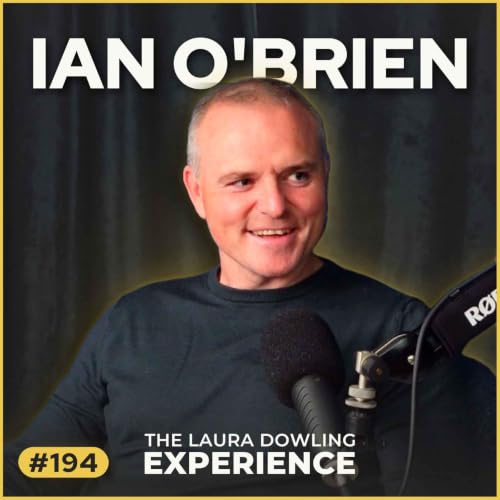
  • His Parkinson's Started With Depression with Ian O'Brien #194
    5 Nov 2026
    Ian O'Brien was 38 when a neurologist told him, within a couple of minutes, that he had Parkinson's disease. For about a year before that he had been on antidepressants for anxiety and depression, and for two years he had been finishing sentences with his left hand holding his right. His first question was whether Parkinson's could cause the anxiety and depression. When the answer was yes, he says it felt like a weight off his shoulders.Now 46 and nearly ten years in, Ian, who co-founded EOPD Ireland, tells Laura what early onset Parkinson's is really like: medication that now lasts him about an hour, switching "off" like a light, planning his day around tablets and protein, and the evenings his daughters help him get ready for bed. He talks about telling his eldest with a poem and letting her interview him on camera, and about Parkinson's being one of the factors in his recent separation.He also explains dopamine in plain language, the gambling and compulsive behaviour dopamine agonists can trigger in some people, deep brain stimulation, why exercise should be the first thing a neurologist mentions, and why talking to other people with Parkinson's has been his best education of all.🔑 Key PointsDepression came firstHis first symptoms were anxiety and depression, and he spent about a year on antidepressants before a physio friend told him to ask his GP for a neurologist.The movement signs he missedFor around two years his handwriting shrank and stopped mid-sentence, and he would reach across with his left hand for the keys in his right pocket.A diagnosis can bring reliefIan says he almost wanted something physically wrong with him to explain how he was feeling, and he walked out of the neurologist's office feeling better.Medication is a daily balancing actLevodopa now lasts him about an hour, and eating close to a dose, especially protein, can stop it working, so he plans tablets, meals and work around the times he needs to be on.Exercise should come firstHe says neurologists don't always lead with it, but high-intensity exercise made him feel almost as if he didn't have Parkinson's, and he has got worse since slowing down.Your whole family gets Parkinson'sHe regrets being a bit selfish at the start and sees the condition as one of the factors in his recent separation, though he and his wife still raise their girls together.Telling his daughter with a poemIan read his eldest a poem about Parkinson's, then a week later let her interview him on camera with questions she wrote herself.Life isn't overHe knows people living well 20 to 30 years after diagnosis, and his advice to anyone newly diagnosed is that you just need to make adjustments.📚 ResourcesEOPD Irelandthe charity for people with early onset Parkinson's that Ian co-foundedParkinson's Irelandthe national charity supporting people with Parkinson'sThe Michael J. Fox Foundationthe Parkinson's research foundation Ian mentionsSamaritans Irelandfree support, any time, if you are struggling⏱️ Timestamps00:00 — Welcome back to the podcast02:17 — Anxiety and depression came first04:16 — "It was like a weight off my shoulders"06:30 — The movement signs he missed09:18 — Why exercise should come first10:22 — Parkinson's and dopamine, explained12:17 — Levodopa and planning the day14:40 — Telling his daughter with a poem17:15 — Dopamine agonists and compulsive behaviour24:59 — Playing soccer for Ireland28:15 — The whole family lives with it33:44 — Deep brain stimulation37:00 — Setting up EOPD Ireland38:52 — "Life isn't over"Thanks for listening! You can watch the full episode on YouTube here. Don’t forget to follow The Laura Dowling Experience podcast on Instagram @lauradowlingexperience for updates and more information. You can also follow our host, Laura Dowling, @fabulouspharmacist for more insights and tips. If you enjoyed this episode, please subscribe and leave a review—it really helps us out! Stay tuned for more great conversations. Hosted on Acast. See acast.com/privacy for more information.
    Show more Show less
    42 min
  • Bitesize Moment: "My Sensitivity Was Actually My Power." — Lynn Mac on Empaths and Boundaries
    3 Nov 2026

    In this bitesize moment pulled from the Laura Dowling Experience back catalogue, Lynn Mac explains how her sensitivity works, how it once left her overwhelmed by other people's emotions, and how healing and boundaries let her choose when to switch it on.


    Ever been told you're too sensitive? Lynn Mac used to think so too, until she realised it was never a weakness. Here's how she learned to protect her own energy without shutting herself off.


    🔑Key Points

    • Lynn describes her gift as a heightened version of the sixth sense everyone already has, like a gut feeling

    • She used to absorb other people's emotions so heavily it felt overwhelming, especially early on

    • She names this as being an empath: soaking in the energy and emotions of everyone around her

    • Her people-pleasing meant she gave endless support to others until she couldn't cope anymore


    🎧 Listen to the full episode here.

    Thanks for listening! You can watch the full episode on YouTube here. Don’t forget to follow The Laura Dowling Experience podcast on Instagram @lauradowlingexperience for updates and more information. You can also follow our host, Laura Dowling, @fabulouspharmacist for more insights and tips. If you enjoyed this episode, please subscribe and leave a review—it really helps us out! Stay tuned for more great conversations.

    Hosted on Acast. See acast.com/privacy for more information.

    Show more Show less
    6 min