Episodes

  • Give Knowing It's Not Coming Back: Money in Friendships & Love w Episode
    10 Nov 2026
    Give Knowing It's Not Coming Back: Money in Friendships & Love Should you lend money to friends? Who pays on a first date? And why is money still the number one thing couples fight about? In this Mixing It Up x Selam & Hello IG Live, Lilly and Julie get honest about money in friendships, dating, and family — from chaotic group-trip budgets and bill-splitting etiquette to a friendship lost over an unpaid debt. Julie shares her rule for lending money ("give it knowing it's not coming back"), why she's not a fan of going 50/50, and how the money culture you grew up with shows up in your relationships. Plus: harambee culture, salary transparency, and why African families need to talk about money before a funeral becomes a courtroom. **IN THIS EPISODE** - 02:22 — Having a budget vs. living by one - 04:19 — The group-trip chat: who puts it on their card? - 07:06 — Firstborns vs. lastborns: does birth order shape your money habits? - 09:14 — Splitting the bill: even split or itemize? - 10:30 — The $2 Venmo request: Gen Z money etiquette - 15:21 — When lending backfires: a friendship lost over money - 19:07 — A therapist's advice: ask for respect, not repair - 22:03 — Honest mistake or red flag? Starting the awkward money conversation - 24:09 — "Give it knowing it's not coming back" + harambee culture - 26:15 — Dating and money: should men pay? Is 50/50 dead? - 30:51 — Debt, saving, and planning for retirement - 32:35 — Money, intimacy, and why couples split over finances - 33:51 — Your childhood money culture follows you - 36:12 — Key takeaway: talk about it - 38:16 — Salary transparency and talking money with friends - 39:10 — Talking to your parents about money before it's too late Mixing It Up! is a Pan-African lifestyle podcast on the Selam & Hello channel, where culture and conversation and meet. Selam & Hello is a Pan-African storytelling platform where Africa and her diaspora come to think, reflect and be heard. Find us: https://linktr.ee/selamandhello Website: https://www.selamandhello.com/ Instagram / YouTube: @selamandhello Email: lilly@selamandhello.com | producer@selamandhello.com Music Credits: Selam & Hello Jingle by Silas Piper / @silaspiper All platforms @silaspiper / / @silaspiper
    Show more Show less
    43 min
  • Does AI Know What Githeri Is? AI & African Education
    21 Oct 2026
    Does AI know what githeri is? Ben and Lilly, both self-proclaimed ‘African optimists’ discuss why the answer to that question matters for the children who need AI most. Nearly four years after his first appearance (unless you caught his episode on parenting last month!), global education expert Dr. Ben Piper returns to Selam & Hello. What began as a revisit of their 2023 conversation, Power in the Culture, becomes an urgent conversation about artificial intelligence in African education: who it serves, who it leaves out, and what it will take for Africa not to miss this window. Ben explains why the worker of 2040 is a seven-year-old today, and why AI models tested almost entirely on rich-world data will miss the child in Kirinyaga or Samburu. He makes the case that AI's biggest promise right now isn't a device in every child's hand, which could widen the gap between rich and poor, but support for the teacher facing 60 learners (or 100 if you are a teacher in Malawi). He also explains why two decades of teacher training in sub-Saharan Africa had the right idea but the wrong methodology. There is real cause for hope. At FLEX 2026, the Africa Foundational Learning Exchange in Lilongwe, Malawi, 42 African governments committed to a shared plan to end learning poverty by 2035. Ben was struck by the 18 ministers and deputy ministers in the room, and points to Senegal, Côte d'Ivoire, Ghana, Botswana, Zambia and Ethiopia, along with parts of Kenya, as countries already showing substantial learning gains, often at national level. Lilly presses him on the creative sector's suspicion of AI data collection, on why education news doesn't draw the same energy as economic news, and on who actually gets the capital in Africa's growth story. Along the way, they revisit a truth Selam & Hello returns to again and again: talent is universal; opportunity is not. This is part one of a two-part conversation. Part two, Ep 117: Africa After Aid: Education, Aid Cuts and What Comes Next, is coming soon. In this episode: 🌍 Why more than half of the world's new workers in 2050 will be African, and what that asks of classrooms today 🗣️ The githeri test: why AI must learn African languages, local context and children's voices 👩🏾‍🏫 AI for students vs. AI for teachers: which one actually reaches the rural poor 📈 FLEX 2026: 42 African governments, one plan to end learning poverty by 2035 Chapters: 0:00 Coming up 1:23 Welcome to Selam & Hello 1:44 Is it bring-your-husband-to-work day? 3:34 Is there still power in the culture? 6:04 What does Africa's growth really mean? 9:04 Will AI take Africa's jobs? 10:29 Does AI understand African children? 12:26 Should creatives trust AI data collection? 14:31 Why should families care about local AI tools? 16:09 Who does AI in education actually help? 19:06 Can AI coach a teacher with 60 students? 21:51 What makes teacher training work? 26:53 Did the 2025 learning goals happen? 30:10 What made these countries succeed? 31:57 Why doesn't education get Finance Bill energy? 34:39 Is talent universal but opportunity not? 36:49 Is Africa still the place to invest? 39:19 Who gets access to capital in Africa? 44:57 What's next: Africa after aid? About Dr. Ben Piper Dr. Benjamin Piper is Director, Global Education at the Gates Foundation, based in Nairobi, where his work focuses on foundational literacy and numeracy. He has spent more than two decades helping children across Africa learn to read, beginning with doctoral research on teacher training in Ethiopia. He holds a doctorate from Harvard University Graduate School of Education. Learn more: - Dr. Ben Piper on LinkedIn: https://ke.linkedin.com/in/benjamin-piper-42a89a32 Gates Foundation: https://www.gatesfoundation.org/ - FLEX 2026 (ADEA): https://adeanet.org/en/press-releases/42-african-governments-back-new-better-funding-shared-plan-end-learning-poverty-2035 - Ep 45: Power in the Culture (2023): https://youtu.be/pYNCXLlSYww - Ep 113: Raising Kids Between Two Worlds: https://youtu.be/z8O_Z1K7ZR4 - Ep 114: African Parenting Wins and Fails: https://youtu.be/EHuNHoskNZk?si=onrn3LKa2epHlkK6 - Daily Nation, FLEX 2026 coverage: https://nation.africa/kenya/news/education/african-education-ministers-meet-in-malawi-for-foundational-learning-5527086 Selam & Hello is a Pan-African storytelling platform where Africa and her diaspora come to think, reflect and be heard. - Find us: https://linktr.ee/selamandhello - Website: https://www.selamandhello.com/ - Instagram / YouTube: @selamandhello - Email: lilly@selamandhello.com | producer@selamandhello.com Music Credits: Selam & Hello Jingle by Silas Piper All platforms @silaspiper / https://www.youtube.com/channel/UCTJMBigciZgiSLzagdsFYLw #SelamAndHello #AfricanPodcast #DrBenPiper #AIinEducation #FoundationalLearning #EducationInAfrica #TeacherTraining
    Show more Show less
    46 min
  • African Parenting Wins and Fails | Blame or Claim Game
    30 Sep 2026
    Does your face light up when your child walks into the room? Lilly and her husband, Dr. Ben Piper, reflect on parenting while playing ‘Blame or Claim’, a game about the wins they'll take credit for and the fails they'll pin on someone else (her? him?).Lilly and Ben have raised four children in Nairobi, between Ethiopian and Black American traditions. In a rare episode with Lilly in the guest seat as well as the host's, the producers read a card and the couple point: at themselves to claim it, at each other to blame. Who was the easy parent? Who let the kids stay home "sick"? Who threatened to send them back home to Gojjam?The answers are funny and unguarded. Calm sports parent or crazy? You decide: while Ben knows the basketball rulebook well enough to cite it to referees, Lilly calls everything traveling - and every referee in Nairobi knows them both by name. Term breaks meant "Piper Academy": reading, maths and writing, with mixed results. And their kids’ friends certainly feared one and loved the other…can you guess who? Then the game turns tender. Lilly reflects on how raising sons revealed how tender the male psyche is, and on Toni Morrison's question about whether your face lights up for your child. At 50, she says, her mother still beams every time she sees her. Ben describes how watching his daughters make their own choices changed how he sees his own mother, and the dreams she held before the decisions she made.What did your parents get right, and what are you choosing to leave behind? And how often do we take the time to ask the questions that might illuminate those important answers. In this episode:🏀 The calm sports parent versus the one every Nairobi referee knows by name🌍 Culture cards: "Auntie," not first names, and the Amharic and Kiswahili that slipped📱 Reading your children's messages, and why you shouldn't go mining for trouble💛 What raising sons and daughters taught them about their own parentsChapters:0:00 Coming up0:45 Welcome to Selam & Hello1:35 How do you play Blame or Claim?2:34 Who was the easy parent?3:54 Should you give your kid a free sick day?4:30 Who is the calm sports parent?6:12 Can children call adults by their first name?8:07 Did we let Amharic and Kiswahili slide?9:24 Would we really send them back home?11:08 Who fell asleep at the school play?13:01 Should you read your children's messages?16:18 What does raising sons teach a mother?17:38 What does a daughter teach you about your own mother?19:49 What are we proudest our children got from us?21:11 What are we sorry they got from us?Learn more:Dr. Ben Piper on LinkedIn: / benjamin-piper-42a89a32 Gates Foundation: https://www.gatesfoundation.org/Selam & Hello is a Pan-African storytelling platform where Africa and her diaspora come to think, reflect and be heard.Find us: https://linktr.ee/selamandhelloWebsite: https://www.selamandhello.com/Instagram / YouTube: @selamandhelloEmail: lilly@selamandhello.com | producer@selamandhello.comMusic Credits: Selam & Hello Jingle by Silas PiperAll platforms @silaspiper / / @silaspiper
    Show more Show less
    22 min
  • Raising Kids Between Two Worlds | Modern African Parenting with Dr. Ben Piper (&Lilly!)
    16 Sep 2026

    What does it take to raise four children across two continents, and still like each other at the end of it?


    In this deeply personal Selam & Hello original, Lilly invites her husband of 27 years, Dr. Ben Piper, into the studio for an honest, funny and tender conversation about modern(ish?) African(ish?) parenting. After 24 years of raising four children and two decades on the continent, the two reflect on what they got right, what they got wrong, and what they are still figuring out.


    This isn't an advice episode. Questions drawn blind from a bowl, many sent in by listeners, turn the interview into a true co-hosted conversation. Lilly and Ben ask each other about raising a child with dyslexia, and about breastfeeding twins in graduate school with no kitchen sink. They cover parenting with behaviorism, and the emotional decision to stay in Kenya while all four children eventually moved to the US.


    The conversation also goes to harder places: the risks Black sons face in the United States, femicide and gender-based violence in Kenya, and Lilly's experience of postpartum depression in a time when few rarely talked about maternal mental health. Through it all runs a family philosophy that Lilly and Ben still live by: no credit, no blame - and love in it all.


    In this episode:

    📚What raising a child with dyslexia taught a literacy expert that the research never did

    🗣️How to advocate for your child at school by setting the bar before teachers set it for you

    👨‍👩‍👧‍👦Four kids, twins and grad school: why community made all the difference

    🌍Staying in Africa while the children built lives in America: did they win the argument?

    💛Mental health, postpartum depression and letting children see their parents cry

    🏡Empty nest, grown-up children and grandparent names (it's Lulu or nothing!)


    About Dr. Ben Piper

    Dr. Benjamin Piper is the Director of Global Education at the Gates Foundation, based in Nairobi, where his work focuses on foundational literacy and numeracy. He has spent his career helping children learn to read across Africa and holds a doctorate from Harvard University. He is also, as he'll tell you, the second-most memorable parent.


    Learn more:


    • Dr. Ben Piper on LinkedIn: https://ke.linkedin.com/in/benjamin-piper-42a89a32
    • Gates Foundation: https://www.gatesfoundation.org/


    Selam & Hello is a Pan-African storytelling platform where Africa and her diaspora come to think, reflect and be heard.


    • Find us: https://linktr.ee/selamandhello
    • Website: https://www.selamandhello.com/
    • Instagram / YouTube: @selamandhello
    • Email: lilly@selamandhello.com | producer@selamandhello.com


    Music Credits: Selam & Hello Jingle by Silas Piper

    All platforms @silaspiper / https://www.youtube.com/@SilasPiper

    Show more Show less
    45 min
  • The Politics of Water: Dr. Anna Msigwa on Drought, Climate, and the Future of Food
    12 Aug 2026
    #ClimateAction #SelamAndHello #LivingWithTheLand #PoliticsofWaterIn this final conversation for Selam & Hello’s Living With the Land series, Dr. Anna Msigwa traces the path that led her into hydrology, climate adaptation, and agricultural water management. Based at the Nelson Mandela African Institution of Science and Technology in Tanzania and also serving as a Research Associate at the University of Arizona Water Resources Research Center, Anna works at the intersection of water, climate, agriculture, and resilience.Anna reflects on growing up in southern Tanzania, where water was both abundant and scarce, and how those early experiences shaped her understanding of water as a precious resource. She shares how a research project in the Pangani Basin and a conversation with a farmer who thought underground water was endless pushed her to pursue a PhD focused on sustainable water use and evidence-based decision-making for farmers, policymakers, and water managers.The conversation also explores how climate change is already reshaping agriculture, why co-design with farmers is essential, and what practical innovation could look like in the years ahead. Anna’s vision for 2050 is clear: localized early warning systems that speak to farmers in their own languages, on their mobile phones, alongside smarter small-scale irrigation systems that reduce dependence on rainfall and strengthen resilience.This episode asks a simple but urgent question: what does it really mean to steward water well, and how can science help us live with the land more wisely?In this episode: 💧How growing up in Tanzania shaped Dr. Msigwa’s curiosity about water, agriculture, and climate resilience. 💧Why water is never abstract — and how sustainable management depends on knowing what is available, what is being used, and what is being saved. 💧How farmers are already adapting to drought and climate shocks 💧What Dr. Msigwa hopes agriculture could look like by 2050This episode is part of Living with the Land, a special series from Selam & Hello in partnership with the Australian High Commission in Kenya, exploring the people and ideas shaping the future of agriculture across Africa.About Dr. Anna Msigwa: Dr. Anna Haji Msigwa is a hydrologist, climate adaptation expert, and lecturer at the Nelson Mandela African Institution of Science and Technology in Tanzania. Her work sits at the intersection of water, agriculture, climate resilience, remote sensing, and AI, with pioneering research in the Pangani River Basin and on AI-powered drought early warning systems. Learn more: Research Associate Anna Msigwa Returns to WRRC https://wrrc.arizona.edu/news/research-associate-anna-msigwa-returns-wrrcThe Nelson Mandela African Institution of Science and Technology (NM-AIST)https://nm-aist.ac.tz/Australian High Commission Kenya: https://kenya.highcommission.gov.au/Selam & Hello is a Pan-African storytelling platform where Africa and her diaspora come to think, reflect and be heard.Find us: https://linktr.ee/selamandhelloFollow Selam & Hello:Instagram / / selamandhello YouTube / @selamandhello / @selamandhello Website https://www.selamandhello.com/ Email us at: lilly@selamandhello.comproducer@selamandhello.com Music Credits: Selam & Hello Jingle by Silas PiperAll platforms @silaspiper / / @silaspiper#SelamAndHello #LivingWithTheLand #AfricanAgriculture #FoodSystems #ClimateAction #AustraliaInAfrica
    Show more Show less
    49 min
  • A Potato for Every Child: Dr. Dinah Borus on Food Security & Africa's Most Underrated Crop
    4 Aug 2026

    More than one billion people eat potatoes every day. Yet this familiar crop is often overlooked in conversations about climate resilience, nutrition and Africa’s food future.


    This episode is Part 2 of Living with the Land, a Selam & Hello series in partnership with the Australian High Commission in Kenya. Lilly speaks with agricultural scientist Dr. Dinah Borus, widely known among farmers as “Mama Viazi, ”about why the humble potato may be one of the continent’s most practical tools for addressing hunger and climate change.


    Kenya grows potatoes primarily for its own people, with most of the country’s harvest consumed locally rather than exported. For Dr. Borus, that makes the potato more than an agricultural commodity: it is a locally grown solution that can strengthen food security, support farmers and feed communities without relying heavily on global supply chains.


    She explains why potatoes are considered a climate-smart crop, but also sounds an urgent warning: the climate crisis is changing growing conditions faster than many crops can naturally adapt. Farmers need stronger seed systems, better research, improved storage, modern equipment and greater access to technology—but many African producers still lack the tools required to increase yields and reduce losses.


    Dr. Borus also offers a bold and memorable idea for the continent’s school-feeding programmes: “a potato for every child.” Could nutritious, locally produced potatoes become a regular part of school meals while creating stable markets for African farmers?


    In this episode:

    🍠What makes the same crops in the US-Kenya-Australia both similar and wildly different?

    🥔Why more than one billion people eat potatoes every day

    🍠What is changing faster: the climate or the crops?

    🥔Why potatoes can be part of a climate-smart agricultural future


    This episode is part of Living with the Land, a special series from Selam & Hello in partnership with the Australian High Commission in Kenya, exploring the people and ideas shaping the future of agriculture across Africa.


    About Dr. Dinah Borus:

    Dr. Dinah Jeruto Borus is a senior agricultural scientist whose career has focused on sustainable agriculture, agribusiness, postharvest solutions and climate-resilient food systems. Known to potato farmers as 'Mama Viazi', she has spent more than two decades advancing potato and sweetpotato value chains across Kenya, Rwanda and other African countries.


    She has held leadership roles at the International Potato Center and ICRAF and now works with the National Potato Council of Kenya. She also serves as the World Potato Congress International Advisor for Africa and Programme Chair for the 13th World Potato Congress in Kenya.


    Selam & Hello is a Pan-African storytelling platform where Africa and her diaspora come to think, reflect and be heard.


    Learn more:

    National Potato Council Kenya: https://npck.org/

    World Potato Congress: https://wpc2026kenya.com/bio-dinah-borus/

    Australian High Commission Kenya: https://kenya.highcommission.gov.au/


    Find us: https://linktr.ee/selamandhello


    #SelamAndHello #LivingWithTheLand #AfricanAgriculture #FoodSystems #ClimateAction #AustraliaInAfrica


    Follow Selam & Hello:

    Instagram / / selamandhello

    YouTube / @selamandhello / @selamandhello

    Website https://www.selamandhello.com/


    Email us at:

    lilly@selamandhello.com

    producer@selamandhello.com


    Music Credits: Selam & Hello Jingle by Silas Piper

    All platforms @silaspiper / / @silaspiper

    Show more Show less
    44 min
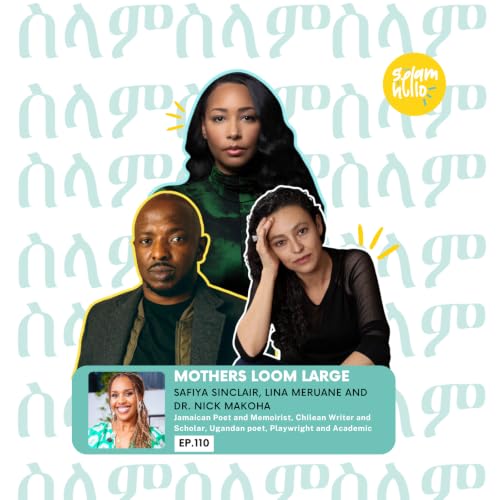
  • LIVE! 2026 Nairobi LitFest: Mothers Loom Large
    28 Jul 2026

    Recorded live at the 2026 Nairobi LitFest on Mother's Day.


    What do our mothers give us beyond life? Language. Courage. Silence. Resistance. Sometimes even the freedom to choose a completely different life.


    Lilly Bekele-Piper sits down with three of today's most celebrated international writers, Safiya Sinclair, Dr. Nick Makoha and Lina Meruane, to explore the complicated inheritance we receive from our families and how literature helps us make sense of it. The conversation moves far beyond motherhood into identity, migration, feminism, memory, faith and the responsibility of telling difficult truths.


    It begins with a deceptively simple question: why is literature uniquely able to hold contradictions? From there the panel reflects on language as technology, poetry as medicine, and writing as an act of survival.


    In this conversation:

    📖 Mothers as our first teachers of language, imagination and identity

    ✍🏾 Writing memoir versus fiction, and why truth matters

    🌍 Migration, race, and becoming someone else through displacement

    🤎Motherhood as choice, expectation and political identity


    Featuring:

    Safiya Sinclair, award-winning poet and author of How to Say Babylon.

    Dr. Nick Makoha, Ugandan poet, playwright and founder of the Obsidian Foundation.

    Lina Meruane, Chilean writer, scholar and author of Against Children.

    Hosted by Lilly Bekele-Piper


    This session was supported by the Open Society Foundations’ South-to-South Initiative and the British Council’s UK/Kenya Season 2025.


    Selam & Hello is a Pan-African storytelling platform where Africa and her diaspora come to think, reflect and be heard.


    Find us: https://linktr.ee/selamandhello

    Email: lilly@selamandhello.com | producer@selamandhello.com


    More information:

    - NBO LitFest: https://www.hayfestival.com/nbolitfest

    - Book Bunk: https://bookbunk.org/

    - Open Society Foundations’ South-to-South Initiative: https://www.opensocietyfoundations.org/?gad_source=1&gad_campaignid=1015010532&gbraid=0AAAAAD8I51aAC9lgxa5iY18T9CB_eY5tS&gclid=CjwKCAjwpqHTBhAcEiwAj2Afug7iT-hlaeiLoZJmcFQK4T_AromoOZ_fOV6ygAdgBC7jKjbcUX7CUxoC0zYQAvD_BwE

    - British Council’s UK/Kenya Season 2025: https://www.britishcouncil.co.ke/uk-kenya-season-2025


    Music Credits: Selam & Hello Jingle by Silas Piper

    All platforms @silaspiper / https://www.youtube.com/@SilasPiper

    Show more Show less
    1 hr and 20 min
  • Inside Lilly's Afro-Modern Home
    21 Jul 2026
    (This episode is a special collaboration with @African Interiors. FULL episode can be found at this link: https://www.youtube.com/watch?v=83vTSspY7jg&t=627s)What makes a house feel like home? Today, Lilly welcomes you into her Nairobi home, where Ethiopian heritage, Kenyan life and Pan-African design come together to tell one family's story.Lilly reflects on identity, belonging, creativity and why the objects we surround ourselves with often become the keepers of our history. From handcrafted furniture and family photographs to Ethiopian coffee pots, Senegalese glass art, Malian textiles and contemporary African artists, every room reflects a life lived across cultures. In this episode:📚 Why books are the heart of this family's living room🌍 Blending Ethiopian, Kenyan and Pan-African design traditions🧵 How heritage inspired the creation of Amina, Lilly's Pan-African textile brand❤️ Why Nairobi has become home while Ethiopia remains the heart's homeThank you to African Interiors for inviting us to share our home and the stories behind the objects that have shaped it!Selam & Hello is a Pan-African storytelling platform where Africa and her diaspora come to think, reflect and be heard.FOLLOW LILLY BEKELE-PIPERSelam and Hello podcast: / @selamandhello https://www.selamandhello.com/FOLLOW AFRICAN INTERIORSAfrican Interiors on YouTube: / @african_interiors African Interiors on Instagram: / african_interiors CREDITSProducer: ‪@african_interiors‬ Host: Lilly Bekele-Piper ‪@selamandhello‬ Director: Simon Wanderi ‪@s.m_wanderii‬Director of Photography: Austin Morara ‪@UrbanTakesProductions‬Editor: ‪@Fame.Fusion.Production‬ Colourist: Esther Magege
    Show more Show less
    13 min