Cover of Safe Aerospace Podcast

Safe Aerospace Podcast

Safe Aerospace Podcast

By: Americans for Safe Aerospace
Listen for free

Season's Savings | 0.99 €/month for 3 months

5.99 €/month thereafter - terms apply. Cancel monthly.
What are pilots really seeing in our skies, and why aren't we talking about it? The Safe Aerospace Podcast brings together military aviators, commercial pilots, air traffic controllers, aerospace professionals, and policymakers to tackle one of aviation's most pressing and least discussed challenges: UAP (unidentified aerial phenomena) in controlled airspace. Hosted by Former F/A-18 pilot, Ryan Graves from Americans for Safe Aerospace, the podcast goes beyond the headlines to explore what UAP encounters mean for flight safety, national security, and the future of airspace transparency. Each episode features firsthand accounts from credentialed professionals, analysis of emerging policy developments, and conversations with the researchers and lawmakers working to bring scientific rigor and institutional accountability to a long-stigmatized issue.© 2026 Americans for Safe Aerospace Science
Episodes
  • Test Pilot Watched a 300-Foot Black Triangle Blot Out the Stars Over Edwards | Dan Isbell Part 2
    15 Oct 2026

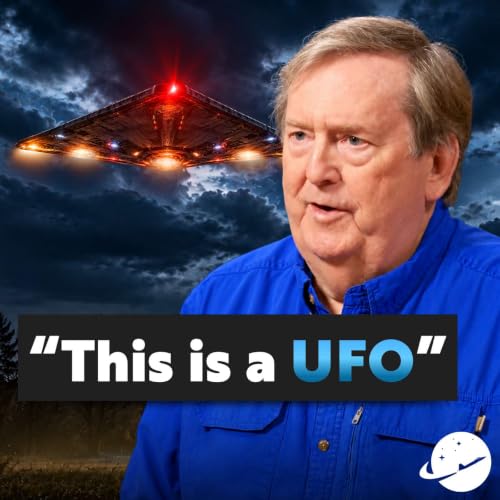
    Stars winking out in the shape of a giant triangle. A beam of light that found him alone at his hot tub, with no source in sight. A sphere of plasma that stopped behind his house. And a veteran journalist’s warning: they’re tracking you.

    In this part two of a two-part series, and the conclusion of Dan Isbell’s story.

    Dan Isbell flew the F-111 on Cold War nuclear alert, graduated first in his Air Force Test Pilot School class, flew more than 70 types of aircraft, and later taught test pilots at Edwards before a career in directed-energy weapons. In part one, he described the silent triangular craft he saw near a NATO base in England in 1980 and kept to himself for 43 years. In part two, he walks through the three encounters that followed, spread across 35 years and three states, none of them from an aircraft.

    I sit down with Dan to hear all of it: a roughly 300-foot black triangle that blotted out the stars over a classified range at Edwards in 1990, moving so slowly it unnerved him; a defocused beam of blue-green light that surrounded him at his Florida hot tub in 2014, its source expanding in discrete steps into a white sphere before accelerating out of sight in under half a second; and a silent plasma sphere that moved down a retention pond and stopped behind his Tampa-area home in 2016. He also describes sitting across a table from journalist George Knapp and filmmaker Jeremy Corbell, and the four words Knapp said to him that he could not shake.

    Dan does not claim to know what any of it was. He says he ruled out the prosaic explanations he could, and as an engineer he has spent decades theorizing about propulsion, optical stealth, and the physics that might make such objects possible, wherever those theories lead. Whether these were unacknowledged programs, a natural phenomenon, or something genuinely outside our science, his account returns to the question this show keeps asking: how many credentialed observers have stayed silent for fear of their careers, and what would we understand about our own skies if they felt safe to speak?

    Missed part one? Watch it here: https://youtu.be/MJHO8iB6tDw

    Learn more, become a member, and support our work at: https://www.safeaerospace.org

    Please like, subscribe, and share this episode to help us continue producing independent aviation-safety research and conversations.

    Show more Show less
    47 min
  • Air Force Test Pilot Saw a Silent Triangular Craft Over an English Golf Course | Dan Isbell Part 1 of 2
    8 Oct 2026

    A red Corvette alone on a dark English road. Strange lights closing fast in the rearview mirror, then stopping dead. A silent, color-shifting craft hovering just above a golf course.

    Dan Isbell spent his career at the leading edge of American airpower. He went straight into the left seat of the F-111, the first variable-sweep-wing fighter, flew nuclear alert for NATO at the height of the Cold War, graduated first in his Air Force Test Pilot School class, and eventually flew more than 70 different types of aircraft. He later helped shape the F-22 program and pioneered the fiber-laser work behind today's directed-energy weapons. On the night of December 26, 1980, driving home from alert duty at RAF Upper Heyford, he saw something he could not explain, and told no one for more than 40 years.

    In part one of a two-part conversation, I sit down with Dan to trace that career from a poor kid who had never set foot on an airport to a test pilot who talked his way into Georgia Tech and never looked back. We discuss the F-111 and the jets that followed, the near-fatal moments he survived, the lung injury he still carries from an F-16 ground fire, and then the encounter itself: a roughly 50-to-60-foot triangular craft ringed with shifting, plasma-like color, completely silent, that descended toward him as he walked closer before he thought better of it and drove away.

    Dan does not claim to know what he saw. He says he worked through every prosaic explanation he could, from a helicopter to a Soviet or NATO aircraft to a reverse-engineered platform of our own, and none of them fit. His sighting also falls within hours of the late-December nights now known as the Rendlesham Forest incident. He kept all of it to himself for decades, convinced that reporting it could end his flying career. Whether the object was an unacknowledged craft, an atmospheric phenomenon, or something genuinely outside our physics, his account raises the question this show keeps returning to: how many credible aviators have stayed silent, and what do we lose as a nation when the people best equipped to observe our skies are the ones with the most to lose by speaking?

    Learn more, become a member, and support our work at: https://www.safeaerospace.org

    Please like, subscribe, and share this episode to help us continue producing independent aviation-safety research and conversations.

    Show more Show less
    1 hr and 42 min
  • Black Triangles, Pilot Reports & the Search for UAP Evidence | JMill & Ryan Graves
    1 Oct 2026

    What are pilots reporting, and how do we turn those accounts into evidence we can study?

    I sit down with Jonathan Miller, known as JMill, to discuss his work on sensemaking and MIT's Confronting Unknowns program. We explore how researchers can study ambiguous data, separate signal from noise, and stay open to new information without jumping to conclusions.

    Then we turn the tables. JMill asks me about the encounters that led me to speak publicly, my 2023 congressional testimony, and the work underway at Americans for Safe Aerospace. We discuss pilot reporting, witness privacy, the development of a structured research database, and a longer-term vision for connecting witness accounts with sensor data.

    We close with accounts reported to ASA, including luminous spheres, objects described near aircraft, and black triangles. I discuss what witnesses have described, how satellite effects can complicate observations, and why credible testimony still needs careful investigation. These are reported experiences and open questions, not established explanations of what the objects are.


    Learn more, report an encounter, become a member, and support our work at https://www.safeaerospace.org/

    Learn more about JMill's sense making work at: https://www.sensemaking.wtf

    Subscribe and share this episode to support independent aviation-safety research and conversations.

    Chapters
    00:00 Opening: pilot reports and unanswered questions
    01:05 Introducing Jonathan Miller (JMill)
    04:27 MIT's Confronting Unknowns and sensemaking
    08:21 Finding signal in ambiguous data
    11:57 Discussing government UAP releases
    18:39 Turning the tables: JMill interviews Ryan
    20:06 Navy encounters and the road to Congress
    24:46 Pilot reporting protections and state policy
    29:47 What ASA's reports can tell us
    32:15 Building a structured research database
    34:37 Oshkosh plans and membership support
    39:40 Sharing witness accounts through the podcast
    42:36 Protecting witness privacy
    43:57 How ASA's mission has evolved
    46:41 A vision for connected sensor networks
    51:30 Confirmation bias and independent analysis
    58:56 Patterns in the reports: spheres and lights
    01:00:44 Satellite effects and ambiguous observations
    01:04:08 A close-range account from Marines
    01:05:57 Black triangles and reported near-misses
    01:09:24 Why reporting matters and how to help

    Show more Show less
    1 hr and 13 min
adbl_web_anon_alc_button_suppression_t1
No reviews yet