

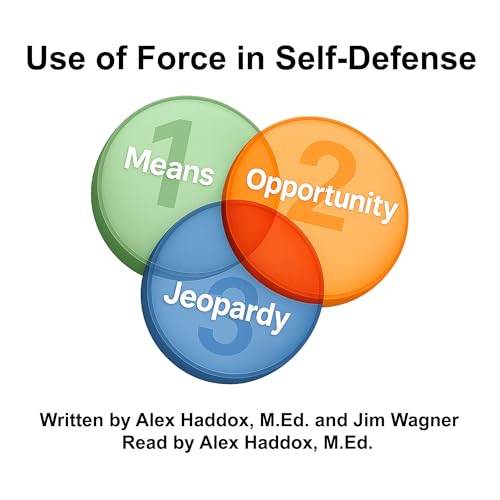
Use of Force in Self-Defense
Impossible d'ajouter des articles
Échec de l’élimination de la liste d'envies.
Impossible de suivre le podcast
Impossible de ne plus suivre le podcast
Bénéficiez gratuitement de Standard pendant 30 jours

Use of Force in Self-Defense
Acheter pour 7,99 €
-
Lu par :
-
Alex Haddox
-
De :
-
Alex Haddox
-
Jim Wagner
This stand-alone lesson introduces the student to the essentials in the Use of Force. Example laws from multiple states are referenced throughout the lecture.
Verbal deflection and de-escalation techniques are always the first line of defense and the use of physical force is a measure of last resort. A force-on-force encounter does not end when the act of violence ceases. The psychological impact of a physical attack can last a lifetime. Legal troubles, both civil and criminal, can linger for years or even decades. This lecture offers a brief explanation of generally accepted use of force legal standards.
There are specific rules on the appropriate use of force in making an arrest, personal protection, defense of another, defense of property, and other situations. Security guards are held to the civilian standard which differs from law enforcement or military. The guiding principle for use of force is a “reasonable amount of force.” For comparison, sworn peace officers are allowed to use a “necessary amount of force” to execute their duty. Security guards and private citizens are not peace officers and held to a more restrictive standard.


