

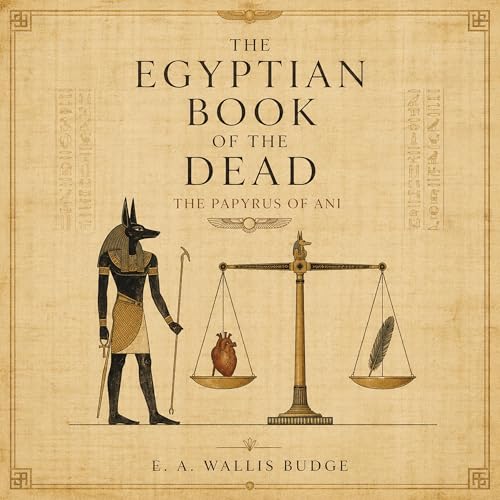
The Egyptian Book of the Dead
The Papyrus of Ani
Unable to add items
Add to basket failed.
Add to wishlist failed.
Failed to remove from Wish List.
Adding to library failed
Unable to follow podcast
Unable to unfollow podcast
0.99 €/mo for 3 months

The Egyptian Book of the Dead
Buy Now for €15.99
-
Narrated by:
-
Matthew Schmitz
Brought to you by Altrusian Grace Media (altrusiangrace.com) and human-narrated by Matthew Schmitz. The Papyrus of Ani is a papyrus manuscript in the form of a scroll with cursive hieroglyphs and color illustrations that was created c. 1250 BCE, during the Nineteenth Dynasty of the New Kingdom of ancient Egypt.
Egyptians compiled an individualized book for certain people upon their death, called the Book of Going Forth by Day, more commonly known as the Book of the Dead, typically containing declarations and spells to help the deceased in their afterlife. The Papyrus of Ani is the manuscript compiled for the Theban scribe Ani.
The scroll was discovered in Luxor in 1888 by Egyptians trading in illegal antiquities. It was acquired by E. A. Wallis Budge, as described in his autobiography By Nile and Tigris. Shortly after Budge first saw the papyrus, Egyptian police arrested several antiquities dealers and sealed up their houses, one of which contained the objects Budge had purchased from the dealers. Budge distracted the guards by offering them a meal while locals tunneled under the house's walls to retrieve the objects, including the Papyrus of Ani.
Stored in several custom tin boxes, the papyrus and other objects Budge had acquired were then smuggled to the principal librarian at the British Museum. Budge was afterward paid a 150GBP "gratuity" from the British Treasury on behalf of the British Museum for acquiring the papyrus.
©2023 Matthew Schmitz (P)2023 Matthew Schmitz


